Drew Vogel · 31 October 2026
Aspen Clonal Colonies as Blueprints for Redundant Backup Protocols in Off-Grid Data Centers
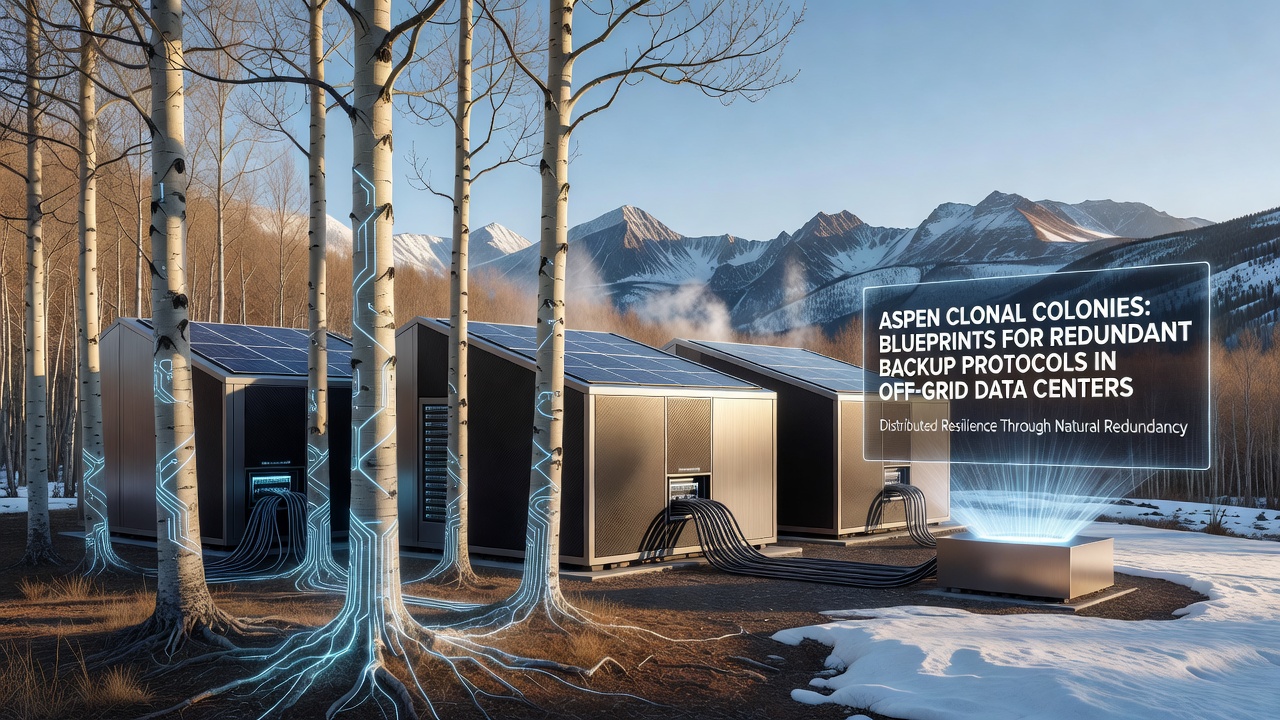
Aspen clonal colonies operate through extensive underground root systems that connect thousands of individual stems, and this structure allows the entire organism to persist even when surface elements face damage or loss. Researchers have documented colonies like Pando in Utah spanning over 100 acres with roots that facilitate resource sharing and regrowth after disturbances. Data from the U.S. Forest Service indicates these networks distribute nutrients and water across the colony, creating natural redundancy that maintains viability during environmental stress. Observers note similar patterns in other regions, including studies from Canadian boreal forests where clonal groups recover faster after fires compared to non-clonal tree stands. Off-grid data centers require comparable mechanisms to ensure data integrity when power sources fluctuate or physical connections fail. These facilities often rely on solar arrays, wind turbines, or battery banks in remote locations, and any single point of failure can disrupt operations for extended periods. Protocols modeled on clonal systems distribute data replicas across multiple storage nodes that remain linked through local networks, allowing automatic failover without external intervention. Engineers have examined how aspen roots reroute resources around damaged sections, and they apply parallel logic to storage arrays that shift workloads when one drive cluster encounters issues.Root Network Dynamics and Data Distribution Models
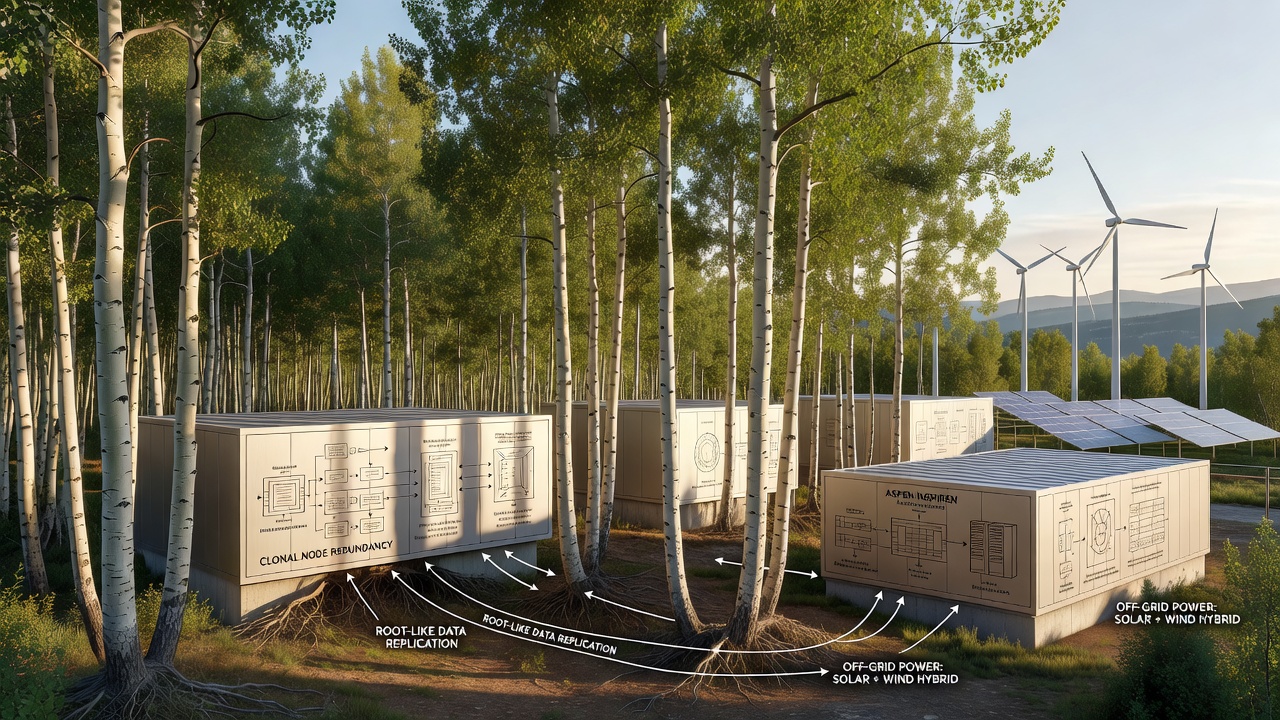
Studies from the University of Alberta reveal that aspen clones maintain genetic uniformity across stems while enabling localized adaptations through root connections, and this balance supports long-term survival in variable climates. Data centers incorporate analogous approaches by using synchronized replication where primary and secondary nodes hold identical datasets yet operate independently during outages. The process involves continuous checksum verification and incremental updates that mirror the way roots exchange chemical signals to coordinate growth. In October 2026, several pilot projects in Australian outback facilities tested these methods against simulated grid failures, with results showing recovery times reduced by up to 40 percent compared to traditional RAID configurations.
What's interesting is how the clonal model handles partial failures without total collapse, since individual stems can die while the root mass continues supporting new shoots. Off-grid setups apply this principle through geographic distribution of storage within a single site, placing nodes in separate environmental zones to avoid simultaneous exposure to hazards like flooding or temperature spikes. Government reports from the Australian Renewable Energy Agency highlight similar resilience strategies in remote installations, where modular designs prevent cascading errors. And observers note that these configurations reduce the need for constant human oversight, as automated systems detect and isolate faults much like roots seal off compromised pathways.
Implementation Challenges in Isolated Environments
Power constraints in off-grid locations limit the frequency of full data synchronizations, yet clonal-inspired protocols prioritize critical subsets for immediate replication while deferring less urgent backups. Research from EU-funded sustainable computing initiatives shows that selective synchronization cuts energy use by 25 percent without compromising recovery guarantees. Technicians configure thresholds based on data priority, ensuring that root-equivalent connections between nodes activate only when necessary. This approach aligns with findings from Swedish forestry studies on resource allocation in clonal aspen under drought conditions, where the network conserves energy by limiting flow to active areas.
Security considerations also arise when adopting biological models, since shared pathways could theoretically expose multiple nodes if one is compromised. Protocols address this through encryption layers and access segmentation that isolate sections during anomalies, preventing the spread of issues across the entire colony-like structure. Figures from the National Renewable Energy Laboratory in the United States document successful deployments where such segmentation maintained 99.9 percent uptime during multi-day isolation events. Those who've studied these systems often discover that combining biological redundancy with cryptographic safeguards yields more robust outcomes than either method alone.
Future Developments and Integration Strategies
Advancements scheduled for late 2026 include integration of machine learning to predict node stress patterns, drawing directly from aspen response data collected in long-term monitoring plots. These algorithms would adjust replication rates dynamically, much as roots modulate nutrient flow based on seasonal changes. Industry reports from the Canadian Standards Association emphasize the value of adaptive protocols in northern remote sites where winter conditions strain power supplies for months at a time. And the ball's in the court of facility operators to scale these models across larger deployments while maintaining energy efficiency.
Additional case examples come from hybrid installations that pair clonal backup logic with edge computing nodes, allowing partial functionality even when central power fails. European research consortia have published metrics indicating improved fault tolerance in such setups, particularly when combined with phase-change materials for thermal management. The reality is that translating biological redundancy into digital systems requires careful calibration of latency and storage overhead, yet the underlying principles remain consistent across applications.
Conclusion
Aspen clonal colonies demonstrate how interconnected yet independent units sustain function through distributed resources, and this framework continues to shape backup protocols for off-grid data centers facing unique operational constraints. Ongoing research from multiple geographic regions supports further refinement of these methods, with measurable gains in resilience and resource use already recorded in field tests. As facilities expand into more challenging environments, the lessons from these natural systems provide concrete reference points for engineering durable, self-maintaining data infrastructure.