Willa Carter · 17 October 2026
Harnessing Aspen Tree Networks for Innovative Water Conservation Techniques in Arid Climates
Understanding Aspen Clonal Systems
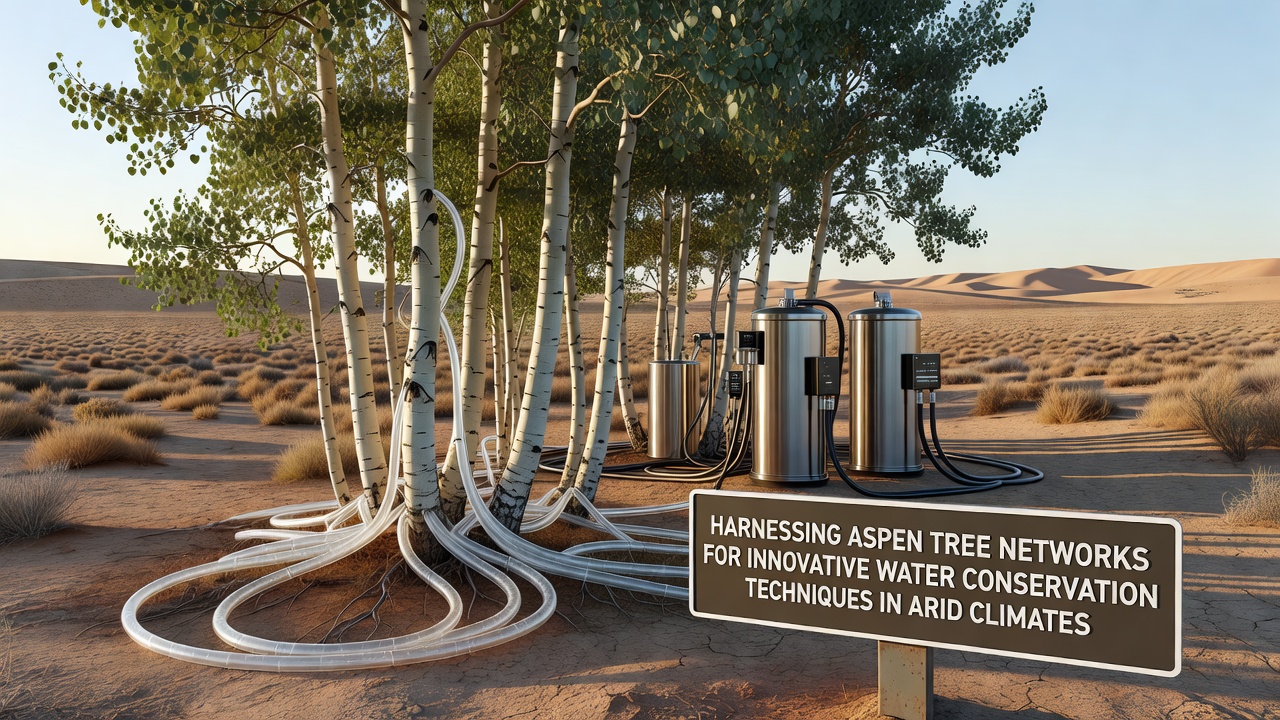
Quaking aspen groves often consist of genetically identical stems connected through extensive underground root networks, and these connections allow the movement of water and nutrients between individual trees during periods of uneven moisture availability. Studies from forest ecology programs show that such linkages can span several hectares, enabling resource redistribution that supports the entire colony even when surface conditions vary widely across the site.
Data collected in western North America indicates that aspen roots can transport water laterally at rates sufficient to mitigate localized drought stress, while similar patterns appear in high-elevation stands where seasonal snowmelt creates patchy hydration zones. Researchers tracking stable isotope signatures in aspen tissues have confirmed that water absorbed by one stem can reach distant ramets within the same clone, demonstrating an efficient natural distribution mechanism that operates without external energy inputs.
Mapping Root Dynamics to Arid Water Challenges
Arid regions face chronic water scarcity that demands distribution methods capable of minimizing evaporation and maximizing reach, and the aspen model supplies a template for subsurface networks that mirror these biological pathways. Engineers examining aspen groves in the Colorado Plateau have documented root depths and branching densities that inform the design of buried conduit arrays intended to convey treated wastewater or harvested stormwater across agricultural plots.
Figures from the U.S. Bureau of Reclamation reveal that conventional open-channel irrigation in the Southwest loses up to 40 percent of delivered water to evaporation and seepage, whereas subsurface systems patterned after aspen connectivity reduce those losses substantially. Pilot installations in Arizona have tested sensor-linked pipe grids that adjust flow based on real-time soil moisture gradients, replicating the feedback loops observed in living aspen clones.
Technological Adaptations and Field Trials
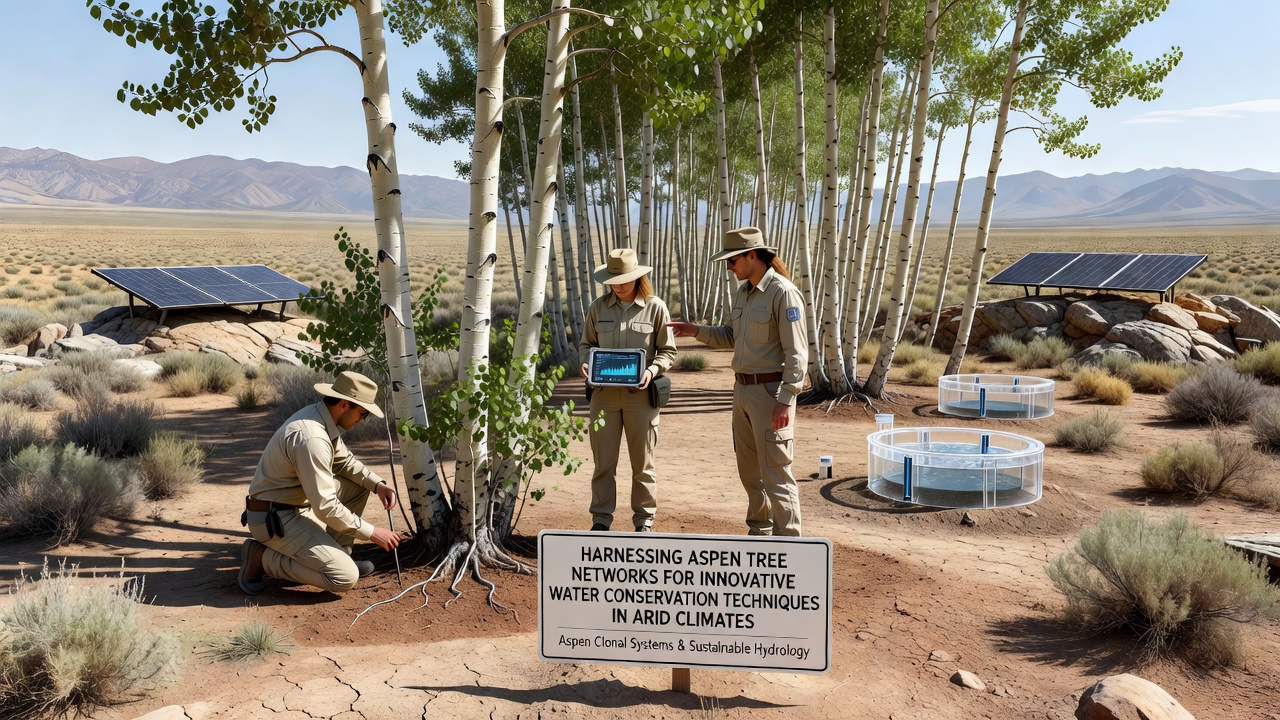
Teams at several universities have constructed modular junction boxes that function like aspen root suckers, permitting water to reroute automatically toward drier soil zones without requiring central pumps to operate continuously. One installation completed in October 2026 near the Mojave Desert integrated pressure sensors at multiple nodes, allowing the system to balance delivery across a 12-hectare test plot while using 28 percent less total volume than drip lines laid in conventional patterns.
Parallel work in Australia has examined how native mallee eucalypts and introduced aspen analogs can guide reticulation layouts suited to red sandy soils, and reports from the Commonwealth Scientific and Industrial Research Organisation detail comparable lateral transport efficiencies under controlled drought simulations. Those findings have prompted several state water authorities to incorporate root-inspired branching ratios into updated design manuals for new irrigation districts.
Integration with Monitoring and Data Systems
Remote sensing platforms now capture canopy temperature and stem water potential across aspen stands, supplying calibration datasets that refine algorithms used in arid-zone irrigation controllers. Satellite-derived vegetation indices correlated with ground-based sap-flow measurements help predict when an entire clonal network shifts its internal water allocation, and these same indices feed predictive models for artificial networks.
Soil-moisture telemetry grids installed in both natural groves and engineered fields demonstrate that response times to precipitation events follow similar exponential decay curves, confirming that the underlying hydraulic principles transfer across biological and synthetic materials. Government agencies in Canada and the European Union have begun referencing these datasets when evaluating proposals for climate-resilient water infrastructure in semi-arid provinces and member states.
Conclusion
Research continues to quantify the precise hydraulic conductivities and branching angles that maximize transport efficiency in aspen systems, while field engineers translate those measurements into scalable components for arid agriculture and landscaping. Continued monitoring of both natural clones and their technological counterparts will determine long-term durability under increasing temperatures and altered precipitation regimes projected for many dryland areas.