Willa Carter · 19 September 2026
Root System Dynamics in Quaking Aspen Groves and Lessons for Resilient Distributed Computing Frameworks
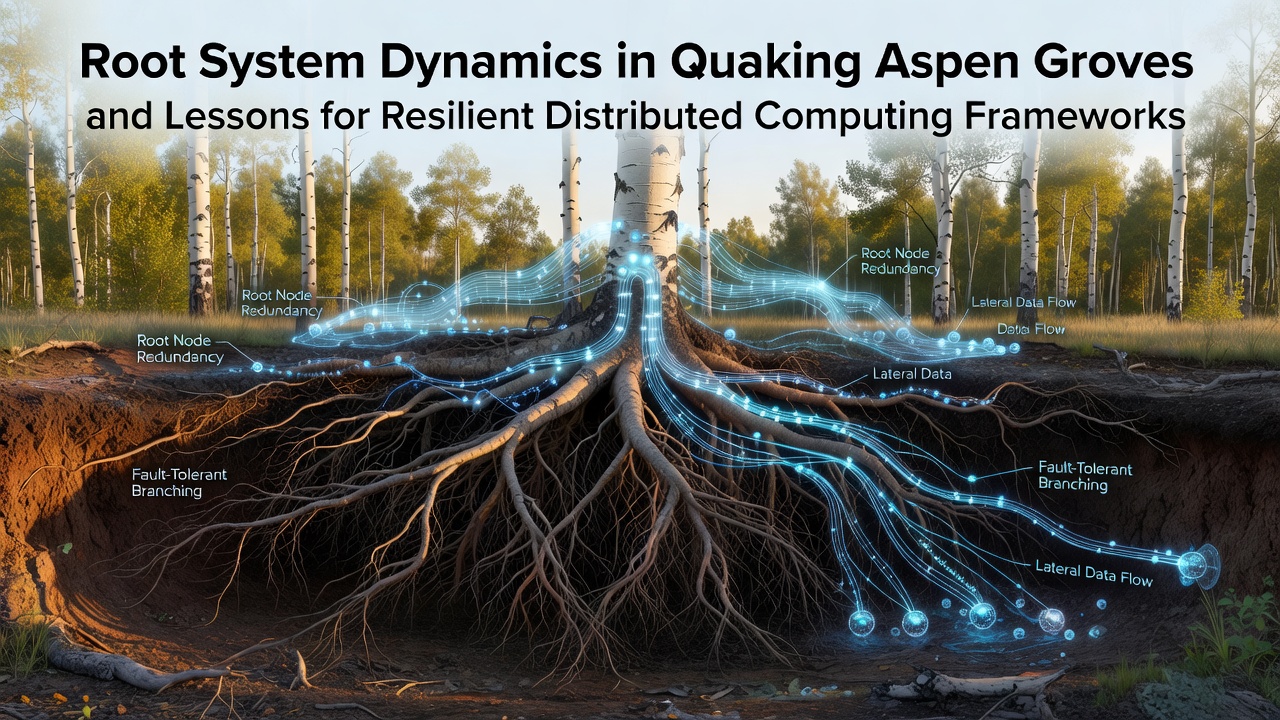
Quaking aspen groves demonstrate how clonal root networks sustain large populations of trees through shared resources and coordinated growth, and observers note that these biological systems offer direct parallels to the design of distributed computing frameworks where multiple nodes maintain operations despite localized failures.
Structure of Aspen Root Networks
Populus tremuloides, commonly known as quaking aspen, spreads primarily through underground rhizomes that connect genetically identical stems into single organisms, and data from long-term forest monitoring shows these connections allow water and nutrient transfer across distances exceeding 100 meters in mature groves. Researchers at the US Forest Service have documented how root grafts form between ramets, creating redundant pathways that reroute resources when individual stems experience damage from drought or herbivory, while studies in Canadian boreal forests reveal that clonal patches can persist for thousands of years because the root system regenerates new shoots even after above-ground disturbances.
September 2026 field reports from the Rocky Mountain region highlighted increased monitoring of aspen clones following widespread beetle infestations, and the resulting data indicates that groves with denser root connectivity recovered faster than isolated stands because shared mycorrhizal associations extended the effective reach of each tree's nutrient uptake zone.
Case Study of the Pando Clone
The Pando clone in Utah represents one of the largest known organisms by mass, covering over 43 hectares through a single interconnected root system that supports approximately 47,000 stems, and measurements compiled by the US Geological Survey confirm that this organism weighs several thousand metric tons with root depths reaching 2 to 3 meters in some areas. Genetic testing has verified that all visible trees belong to the same individual, and observers have recorded how the root network continues to produce new stems even as older ones senesce, demonstrating continuous turnover within a stable underground infrastructure.
Parallels to Distributed Computing Systems
Distributed computing frameworks rely on interconnected nodes that share processing loads and maintain data integrity across geographic separations, and the aspen root model illustrates how redundancy at the connection level prevents total system collapse when individual components fail. In computing environments, protocols such as gossip-based communication or mesh networking mirror the way aspen roots form multiple pathways, and evidence from European research institutions shows that systems incorporating similar redundant routing experience lower downtime during partial outages because traffic or data packets reroute automatically through surviving links.
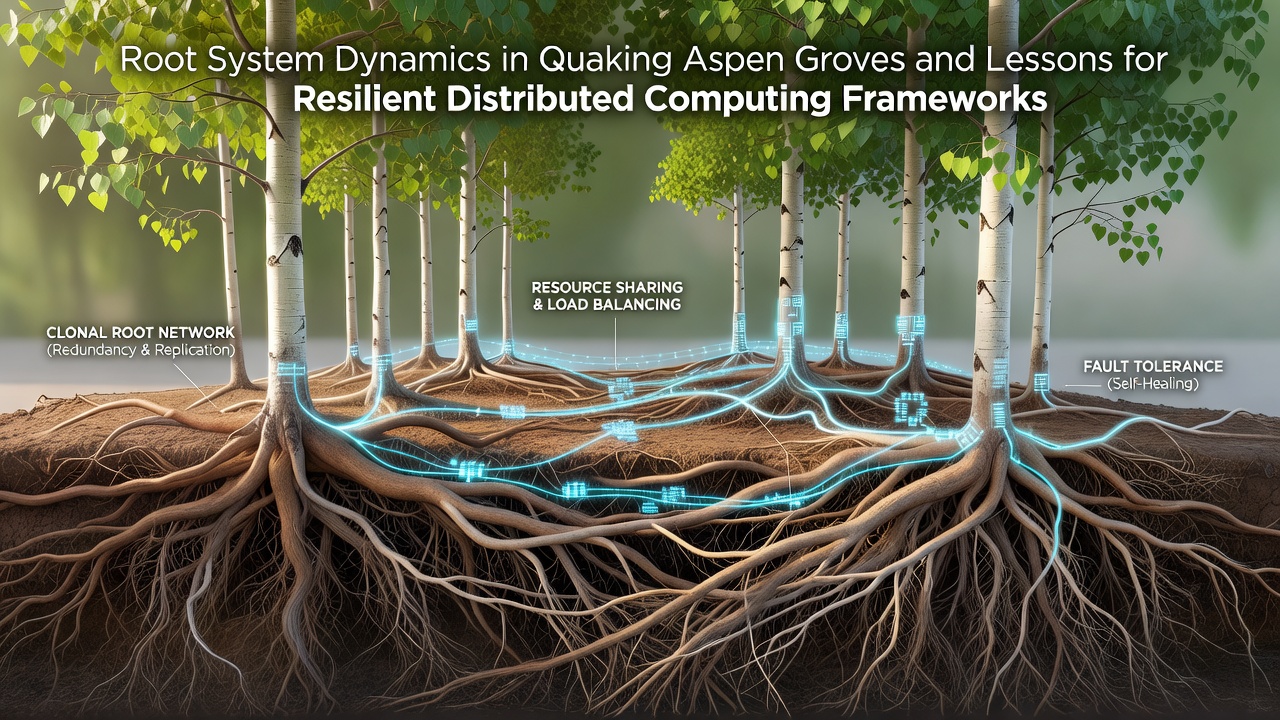
One study conducted by Australian National University researchers examined fault-tolerant algorithms inspired by clonal plant systems, and their simulations demonstrated that networks modeled after aspen rhizomes maintained higher throughput under random node removal compared to traditional tree topologies because the biological equivalent distributes load through lateral connections rather than central hubs. Resource allocation in aspen groves occurs through pressure gradients and hormonal signals that balance growth across the clone, and engineers have applied analogous load-balancing techniques in cloud environments where virtual machines migrate workloads to underutilized nodes without requiring a single coordinator.
Resilience Mechanisms and Their Computing Equivalents
Aspen clones survive repeated fires and climate shifts because teh root system stores carbohydrates and maintains dormant buds that activate when conditions improve, and distributed frameworks achieve comparable persistence through checkpointing and state replication across multiple servers. Data from long-term ecological plots indicates that aspen root biomass can constitute up to 70 percent of total clone mass, providing substantial storage capacity that buffers against seasonal shortages, while computing architects implement distributed ledgers or object storage systems that keep copies of critical data in geographically dispersed locations to survive regional failures.
What's interesting is how mycorrhizal fungi extend the effective root network of aspen clones by forming symbioses that increase phosphorus and nitrogen acquisition, and software developers have explored biologically inspired overlay networks that add virtual connections between nodes to improve information exchange speed during high-demand periods. In September 2026, proceedings from a joint Canadian-European workshop on resilient infrastructure presented case studies where aspen-derived models informed updates to edge computing deployments in remote areas, resulting in measurable improvements in uptime when primary power sources experienced intermittent disruptions.
Implementation Considerations for Computing Frameworks
Engineers seeking to incorporate lessons from aspen dynamics must account for the energy costs of maintaining redundant connections, and field measurements show that aspen clones allocate significant resources to root maintenance even during periods of low above-ground activity. Similar trade-offs appear in computing when systems run continuous synchronization protocols, yet research indicates that selective activation of backup pathways, much like dormant aspen buds, reduces overhead while preserving rapid response capability. Organizations operating large-scale clusters have begun testing adaptive topologies that reconfigure based on observed failure patterns, drawing directly from observations of how aspen root systems prioritize new growth in directions with available soil resources.
Conclusion
Root system dynamics in quaking aspen groves establish clear mechanisms for long-term persistence through shared infrastructure and distributed resource management, and these biological patterns continue to inform the development of computing frameworks that prioritize redundancy and adaptive routing. Ongoing monitoring programs and cross-disciplinary studies supply additional data points that refine both ecological understanding and technical implementations, while September 2026 updates from multiple research groups underscore the practical value of these parallels in environments facing increasing variability.